 Daisy Goodhand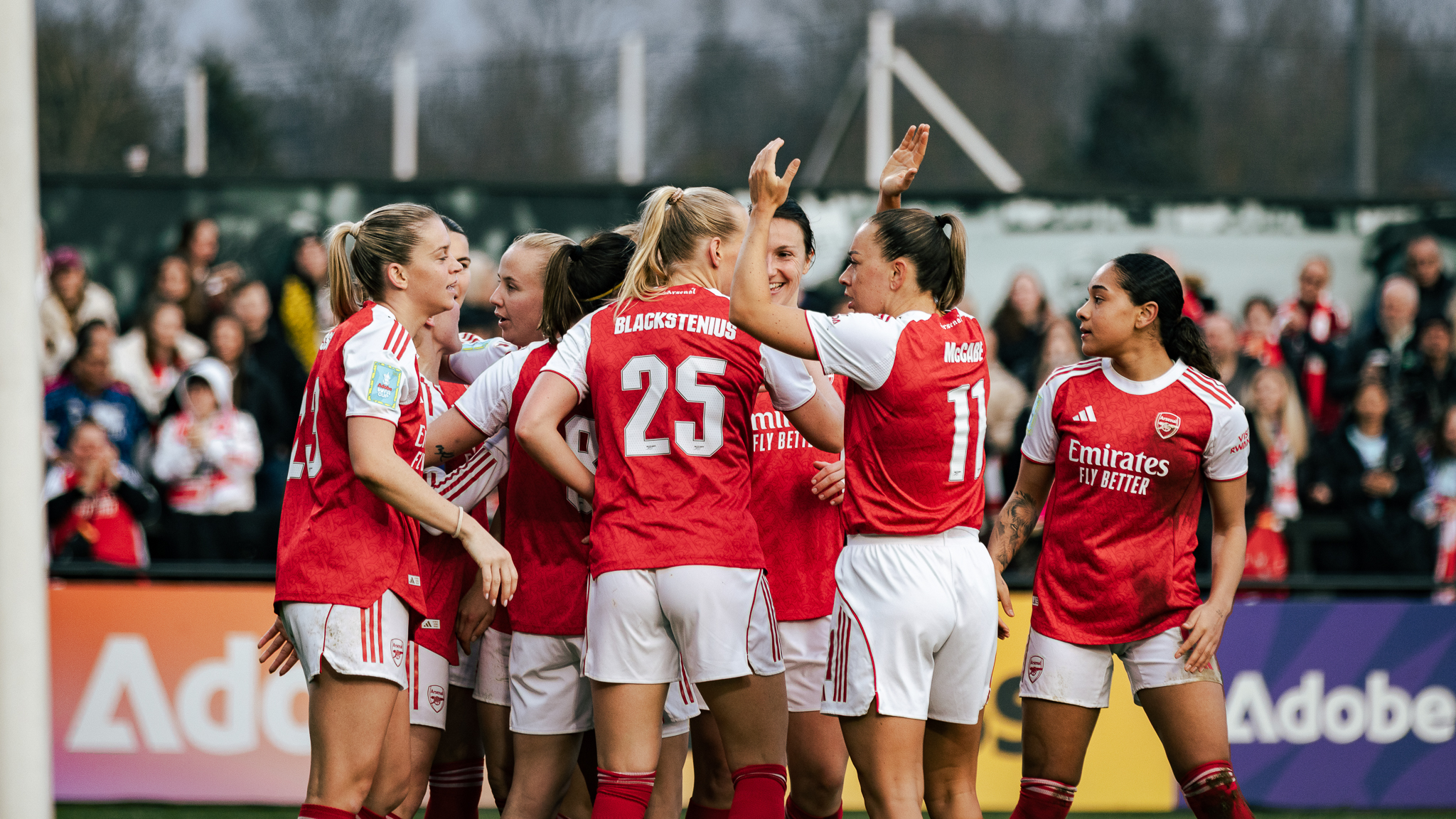
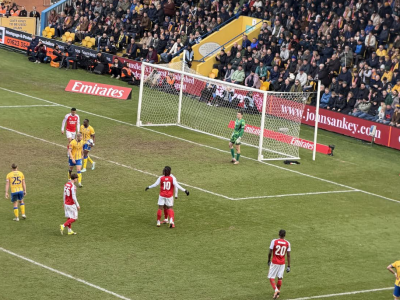
Arsenal Women’s 2-0 FA Cup win over Aston Villa at Meadow Park did what it needed to do. Progression, a clean sheet, moments of quality, and no unnecessary drama. On the surface, it felt straightforward. Scratch a little deeper, though, and the same themes that have followed this team for much of the season were still present, just framed in a slightly more forgiving context.
That’s not a criticism of the result. Cup football rarely allows for perfection. But as Arsenal move through a demanding run of fixtures, it’s becoming harder to separate short-term solutions from longer-term concerns.
Rotation, or the lack of It
One of the first things that stood out was how little rotation there actually was. Going into the game, I expected to see Taylor Hinds involved, particularly given how carefully Emily Fox’s minutes have been managed in recent months. Instead, Hinds didn’t feature at all, not even from the bench, while Fox started and was then forced off early through injury.
Smilla Holmberg stepping in softened the blow, and more on her later, but it does raise questions. Arsenal now have multiple options at fullback, yet the rotation still feels selective rather than systematic. If the intention is to protect players from overuse, it needs to be applied consistently. Otherwise, it starts to feel reactive rather than planned.
Defensive stability, confirmed again
If there’s one area where Arsenal genuinely look settled now, it’s defensively. Lotte Wubben-Moy’s return to the starting lineup, stepping in for the injured Leah Williamson, felt seamless. That shouldn’t surprise anyone, but it was reassuring all the same. If Wubben-Moy is required in the bigger games coming up, I have little doubt she’ll rise to it.
The back line as a whole continues to look far more organised than earlier in the season. This no longer feels like a brief uptick in form; it’s sustained improvement. Anneke Borbe looked confident again, commanding her area well, and the clean sheet felt deserved rather than fortunate.
There was also a noticeable improvement at set pieces. Better delivery from Katie McCabe, clearer targets in the box, and repeated connections with Wubben-Moy. Given how much of a concern set pieces have been, that felt significant. I’d be surprised if a goal from her doesn’t arrive soon.
Versatility vs makeshift
Steph Catley’s continued lack of rest remains slightly concerning. Even when Laia Codina came on, she shifted into midfield, rather than replacing Catley. Renée Slegers has spoken a lot about valuing players who can operate in multiple positions, and there is value in that, but there’s a fine line between versatility and necessity.
Slegers also mentioned to the Gooner Fanzine having “another player” who could operate as a striker or number nine, but is yet to. That comment stuck with me. Is this about genuine tactical flexibility, or is it about filling gaps because the squad doesn’t quite offer enough natural options? At times, it feels like the latter.
“There’s players who can play for us in the nine as well that you haven’t seen” Renee Slegers tells me after I asked about Russo and Blackstenius’ relationship
— Freddie Cardy (@CardyFreddie) January 18, 2026
Alessia Russo’s feature in the number ten role is a good example. It works in moments, but it doesn’t get the best out of her. That’s less about Russo herself and more about what Arsenal lack around her. Again, it comes back to depth, or the absence of it.
Holmberg, and a glimpse of the future
Smilla Holmberg was the one genuinely unpredictable element off the bench, even if her introduction came earlier than planned. She looked tired towards the end, understandable given the circumstances, but there was still plenty to like. Her creativity, willingness to overlap, and confidence in possession stood out, and the reception she received from the Meadow Park crowd reflected that. Her delivery into the box was particularly impressive too; early, accurate crosses that asked real questions and gave Arsenal a different kind of attacking threat.
Holmberg represents the direction Arsenal should be moving in: young, brave, creative, and capable of offering something different depending on the game state. She isn’t a like-for-like replacement for anyone, and that’s the point. Arsenal need more players who expand their options rather than narrowing them.
Midfield control, again through Kim Little
Kim Little’s role further forward was another reminder of just how complete a midfielder she is. Her movement, passing, and ability to arrive late in dangerous areas added a different dimension, and she once again controlled the tempo of the game with quiet authority.
It still amazes me how underrated she remains across the league. Few players offer that level of control, intelligence, and consistency. She does everything, and often without fuss.
?@Boodlepim ? pic.twitter.com/eAsNIjXog6
— The Gooner (@GoonerFanzine) January 18, 2026
Predictability creeping back in
Despite the win, Arsenal’s attacking issues haven’t disappeared. They were simply less punishing in this context. The bench told its own story: four defenders and two goalkeepers, with limited attacking variation available. Outside of Holmberg, there wasn’t much to alter the shape or rhythm of the game.
Victoria Pelova’s late introduction felt more like rotation than intent, and it’s increasingly difficult to see what her defined role is under Slegers. That uncertainty mirrors a broader issue: Arsenal don’t currently have many ways to change a game when Plan A stalls.
The bigger picture
Atmosphere-wise, Meadow Park offered a welcome contrast to the Emirates last week. It felt louder and more connected. That matters, especially at this stage of the season.
Arsenal remain in the cup competitions, and that’s where the focus has to be for now. But strong defensive performances and controlled wins will only take you so far. To genuinely challenge for silverware, you need options. You need variety. You need the ability to introduce something new when the game demands it.
This isn’t solely on the players, or on Slegers. Squad building matters. Investment matters. Especially on the day it emerged that Arsenal generated the highest revenue of any women’s football club in 2025, according to Deloitte, it’s hard not to feel that the squad should reflect that ambition more clearly.
There’s progress here, no doubt. But progress needs backing. If Arsenal want to turn control into conviction, the next steps can’t all be taken on the pitch.